
On February 20, 2025, the Trump administration formally designated eight cartels and transnational criminal organizations as Foreign Terrorist Organizations and Specially Designated Global Terrorists. The list included the Sinaloa Cartel, the Cartel de Jalisco Nueva Generacion, the Cartel del Noreste, the Gulf Cartel, La Nueva Familia Michoacana, and Carteles Unidos. In November 2025, Venezuela’s Cartel de los Soles was added to the list. Since September 2025, U.S. forces conducted over 35 strikes on alleged drug-smuggling vessels in the Caribbean and Eastern Pacific, killing at least 115 people. These strikes were the most operationally consequential application of the FTO framework in the Western Hemisphere in modern history.
The FTO designation was designed for organizations with a primarily political or ideological agenda. Cartels are criminal enterprises, driven by profit, structured around business logic, and embedded in local governance systems in ways that terrorist organizations rarely are. This distinction matters operationally, and understanding it is essential to evaluating what the designation can and cannot achieve.
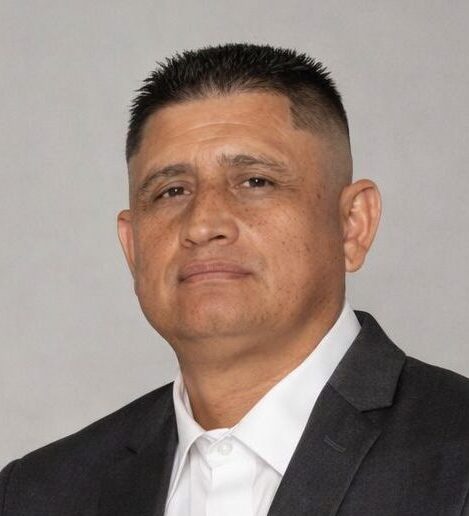
“We spent years fighting organizations in Colombia that had both political ideology and criminal revenue. The lesson was that you could disrupt the ideology but if the money kept flowing, the organization adapted and survived. Cartels have no ideology to disrupt. Only the money.”
What the FTO designation actually unlocks: The legal framework creates real tools. Material support for designated organizations becomes a federal crime punishable by up to life in prison. Secondary sanctions apply to foreign financial institutions that facilitate transactions with designated groups. These are meaningful pressure instruments, particularly for disrupting cartel financial networks that rely on access to the U.S. banking system. The designation also provides a legal basis for the military strikes the administration has conducted, though legal experts have noted that FTO designations do not explicitly authorize lethal force, and the constitutional authority for the strikes without congressional approval remains contested.
What the FTO designation cannot do: Kinetic pressure can impose costs and disrupt logistics. It does not address the demand-side economics that sustain cartel revenue, nor the institutional corruption that provides their operational environment. Latin America has decades of experience with militarized anti-crime campaigns that produced temporary disruption followed by organizational adaptation. After Pablo Escobar’s death in 1993, the Medellin Cartel fragmented not into peace but into dozens of smaller, more decentralized, and in many ways harder-to-target successor organizations. The same pattern followed the dismantling of the Cali Cartel. Every major kinetic success in Colombian counter-narcotics history was followed by organizational evolution, not elimination.
The Cartel de los Soles problem: Experts have noted that the Cartel de los Soles designation presents a specific analytical challenge. Unlike the Sinaloa Cartel or CJNG, the Cartel de los Soles is not a formalized organization with a clear command structure. It is widely understood as a term describing a corrupt network within Venezuela’s armed forces engaged in drug trafficking. Designating a network as an FTO creates legal tools but does not create a targetable organization in the military sense. The operational implications of that distinction were obscured in the run-up to Operation Absolute Resolve but will matter enormously in the post-Maduro transition period.
The operational strategy gap: The FTO designation is not wrong in its underlying logic. These organizations do threaten U.S. national security. But it is a legal tool, not an operational strategy. The strikes in the Caribbean demonstrate willingness to use force. They do not demonstrate a coherent theory of how sustained kinetic pressure degrades criminal organizations that have shown extraordinary adaptability across decades of counter-narcotics efforts. The operational strategy still needs to be built on sustained intelligence, bilateral cooperation, and institutional capacity that actually degrades criminal networks over time rather than displacing them geographically.
The Colombia experience under Plan Colombia offers the most relevant model: not because it used military force, but because it combined military pressure with institutional development, judicial capacity building, and sustained bilateral engagement over more than a decade. That combination produced durable results. Strikes alone, without the institutional architecture to consolidate their effects, produce temporary disruption and permanent adaptation. That is the lesson the FTO framework, as currently applied, has not yet absorbed.